World Models Attract Billions, Yet Commercial Traction Lags
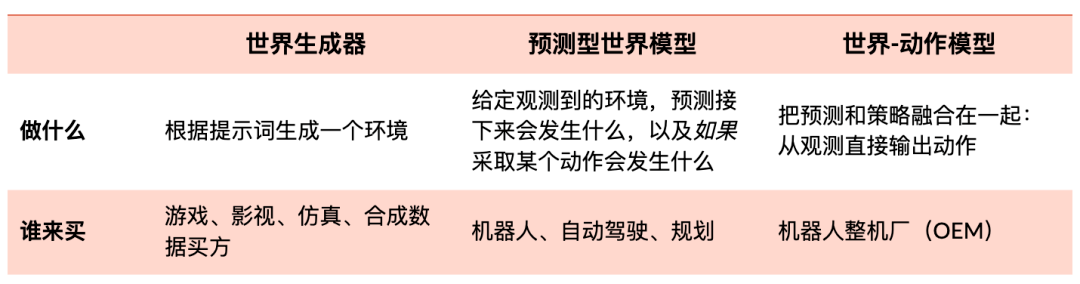
Over $3 billion flowed into world model startups in the first half of 2026. But of the 18 companies in the space, only four have named customers, raising questions about whether the technology can justify its valuation hype. The funding surge comes as NVIDIA offers its own world model for free, forcing startups to defend their paid offerings.
The Benchmark Gap
Research suggests that standard benchmark scores fail to reflect real-world capabilities. World models perform well on lighting and other appearance perturbations but lag on camera viewpoint changes, where they are 7.6 to 83 times slower at inference. This gap between lab metrics and deployment reality is a critical challenge for companies selling the technology.
“The value is shifting to whoever controls deployment,” said one investor familiar with the sector. “Building a model is becoming commoditized; integrating it into workflows is where the moat lies.”
Market Size and Value Capture
By 2033, the software market for world models is projected to reach $11–17 billion. However, the bulk of that value may accrue to companies that master deployment rather than those that develop the underlying models. This dynamic mirrors earlier AI waves, where application-layer companies captured more value than model builders.
NVIDIA’s free offering further complicates the picture. By providing a capable world model at no cost, the chip giant is commoditizing the base layer while selling the compute needed to run it. Startups must therefore differentiate through vertical integration, proprietary data, or superior deployment capabilities.
Forward Look
As funding continues to flow, investors will increasingly demand evidence of paying customers and real-world deployment. The coming year will likely see consolidation, with companies that cannot demonstrate commercial traction struggling to raise follow-on rounds. For now, the world model sector remains a high-stakes bet on a future where simulation and physical AI become ubiquitous.