US Politics Fractures Over Tech and Trade: What It Means for Crypto and AI
Both US parties are now split by a deeper divide than traditional left-right politics: how to win the next technology race and counter strategic rivals, but who profits, who pays, and how much government power should be used. This fragmentation is reshaping policy on AI, semiconductors, and digital assets.
Republican Factions and Crypto Policy
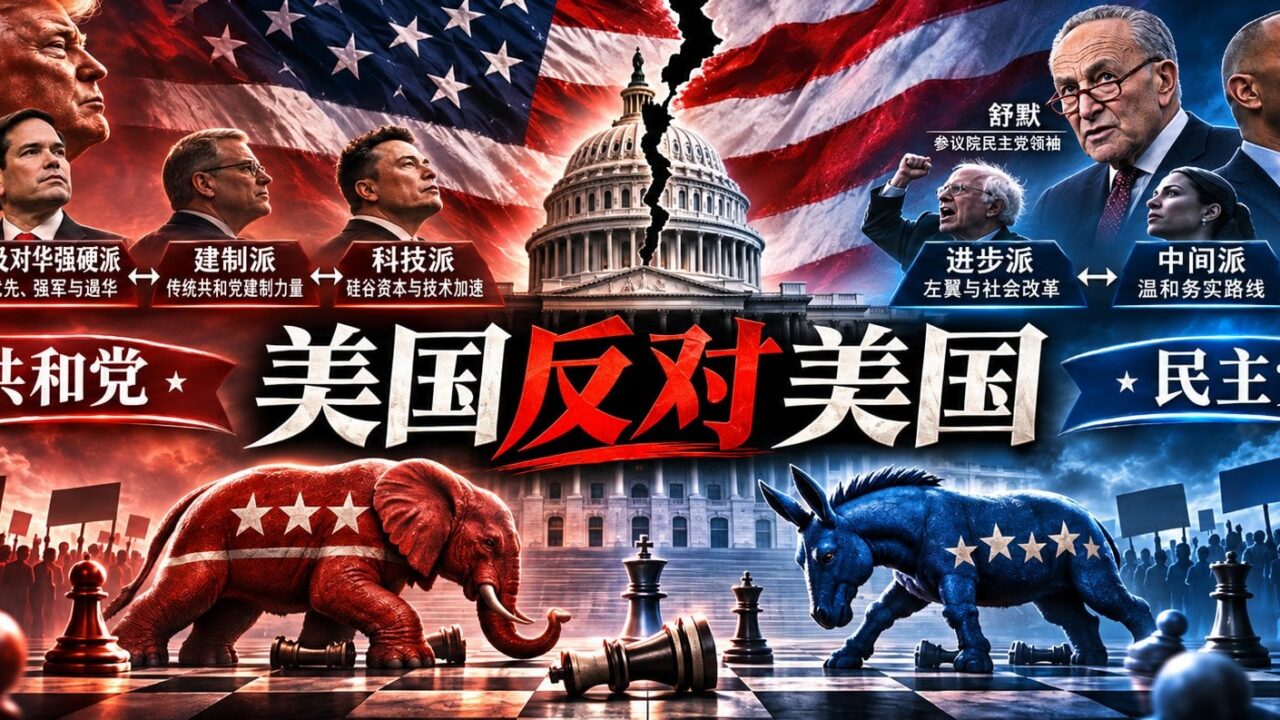
Within the Republican Party, at least four distinct groups have emerged:
- MAGA economic populists (e.g., Bannon) prioritize American workers, oppose long Middle East wars, and favor strict limits on advanced chip exports to China. They are skeptical of Big Tech’s gains and could support tighter scrutiny of crypto if it benefits large corporations.
- National security hawks (e.g., Rubio, Bessent) focus on preventing US technology from enhancing China’s strategic capabilities, including chip export controls and cloud computing restrictions. They may push for stricter compliance in crypto to prevent sanctions evasion.
- AI accelerationists (e.g., Sachs, Vance, Lutnick) worry that over-restricting exports will push foreign customers to alternatives like Huawei. They advocate for conditional sales to maintain US market position. This group is generally more supportive of innovation-friendly crypto policies.
- Trump-centric presidential power: Trump retains deal-making flexibility, sometimes favoring hardliners, sometimes pushing for industry-friendly outcomes. His unpredictability extends to crypto, where he has shifted from critic to supporter.
The recent Nvidia CEO Huang incident illustrates these tensions: Trump and Vance won the personnel decision, national security hawks secured some export control measures, and Democrats gained an investigation line. No faction exited the game.
Democratic Factions and Crypto Oversight
Democrats are also a broad tent:
- Congressional leadership (Schumer, Jeffries) prioritizes maintaining a majority and focuses on healthcare, cost of living, and government accountability. They are likely to pursue investigations into crypto’s role in financial risks.
- Moderates and pro-growth pragmatists (e.g., New Democrat Coalition, Gov. Shapiro) emphasize local governance and industry investment with conditions. They may favor balanced crypto regulation that encourages innovation while protecting consumers.
- Progressive and democratic socialist left (e.g., AOC, Sanders) targets corporate concentration and worker bargaining power. They are skeptical of crypto as a tool for speculation and may push for stricter oversight.
- Labor and local industry alliances care about project approvals and local jobs, which could influence crypto mining regulations and energy costs.
- National security Democrats (e.g., Slotkin) stress oversight and legal compliance, likely supporting stringent crypto AML/CFT measures.
Democrats are planning accelerated investigations, as seen with letters to Commerce Secretary Lutnick over Nvidia’s influence and calls to probe potential misconduct after Huang’s reinstatement. This signals how they might use congressional majority power to scrutinize tech and crypto sectors.
Implications for Crypto and AI
The intra-party fights mean policy outcomes on crypto and AI will be shaped by shifting coalitions rather than strict party lines. For the crypto industry, this creates both risks and opportunities:
- Regulatory uncertainty persists as factions debate who should bear the costs of tech leadership.
- National security concerns may lead to stricter export controls on AI chips and potentially on crypto mining hardware or cloud services.
- Investigations into tech giants could spill over into crypto, especially regarding market concentration and consumer protection.
- Bipartisan support for innovation-friendly policies may emerge if AI accelerationists and pro-growth Democrats align.
Forward-Looking Perspective
As the US heads toward 2026 midterms and 2028 presidential race, both parties must resolve their internal contradictions. Republicans need to reconcile tech capital with economic populism; Democrats must turn investigative victories into a coherent governing agenda. For crypto, the key questions are: Will the US adopt a coherent regulatory framework, or will it remain a patchwork of enforcement actions? How will AI export controls affect the global compute landscape that underpins crypto networks? The answers will depend on which faction prevails in each party—and whether the “America against America” dynamic yields constructive policy or prolonged gridlock.