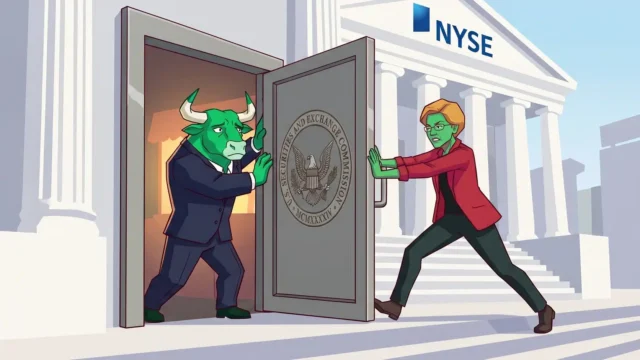
UK Takes Hard Line on DeFi
Cointime reports: The Financial Conduct Authority (FCA) plans to require decentralized finance (DeFi) platforms to be authorized under its incoming crypto rules, a stricter approach than that of the U.S. or EU. FCA officials said the decision reflects high risks of fraud, scams and money laundering, and the difficulty users face in recovering stolen funds.
The regulator cited the record $6.4 billion hack of Binance in October. Although Binance is a centralized exchange, hackers moved large sums through decentralized exchanges, which do not freeze stolen assets, swapping them into other tokens to obscure traces. Jane Moore, the FCA’s head of payments and digital assets, said the speed and scale of such transfers can frustrate attempts to freeze and block funds.
A Deliberate Divide
Under the plan, UK-regulated crypto trading platforms will not be allowed to execute retail trades on DeFi platforms. Moore said the divide between regulated and unregulated sectors is intentional given the lack of consumer protections in DeFi. The FCA also intends to require all UK retail orders for equities, tokenized or not, to be executed on a regulated platform, cutting off access to offshore DeFi venues for tokenized stocks. Jamie Bell, the FCA’s head of capital markets, said the same risk should be treated the same way. The FCA and the Bank of England have set out a shared vision for tokenization within the regulated system.
The FCA consulted on wider crypto rules earlier this year and in October published draft guidance on how its rules apply to firms providing services that use or interact with DeFi. The consultation closed on November 18, with final guidance expected in January 2027, ahead of the crypto regime taking effect on October 25, 2027.
Industry Pushback
Crypto firms argue the approach will leave UK investors without access to products such as tokenized equities and decentralized lending. Linda Jeng, chief legal and policy officer at Aave Labs, called the FCA’s position “highly problematic” and has asked the regulator to clarify which DeFi service providers its rules would cover. Coinbase’s head of policy in Europe, Katie Harries, said that where the U.S. and EU are building rules for regulated DeFi access, the UK is “creating a prohibition.” In September, the EU’s European Securities and Markets Authority proposed a new regulated service under MiCA for crypto firms that give customers access to DeFi protocols. UK trade group CryptoUK has urged the FCA not to treat DeFi developers as regulated by default, warning that parts of the proposed guidance go further than the law.
Harry Halpin, CEO of decentralized VPN provider Nym, told Decrypt that a truly decentralized DeFi platform would be very hard to regulate since there is no central party to oversee. “If the government attempts then to block or censor access to these platforms, and so slowly built a Great Firewall of Britain, people will simply use a VPN,” he said.
Forward Look
The FCA’s final guidance in January 2027 will be pivotal for DeFi in the UK. If the strict stance holds, UK investors may face reduced access to decentralized products, while firms may relocate or restructure. The approach contrasts with the EU’s MiCA-based regulated access and the U.S.’s evolving framework, raising concerns about the UK’s competitiveness as a crypto hub. How the FCA defines which DeFi entities fall under its rules will determine the practical impact.