AI Dominates Venture Capital in 2026
Cointime reports: Global venture funding reached $679 billion through September 2026, with AI capturing 64% of the total, up 14 percentage points year-over-year. The concentration is stark: in Q3, AI companies accounted for roughly $50 billion of the $55 billion year-over-year increase. Meanwhile, older vintages remain under pressure. US VC funds launched in 2017 had returned only 37 cents per dollar invested as of June 30, highlighting the liquidity crunch for limited partners.
Mega-IPOs and Secondary Liquidity
SpaceX and Anthropic together sold nearly $180 billion in stock in their 2026 IPOs, but no venture fund reduced its stake. About $178 billion went to the companies, while $2 billion in secondary sales came from seven Anthropic founders. The IPOs provided liquidity primarily to founders, not to VC backers. Anthropic’s filing revealed that compute and infrastructure spending fell to 57% of revenue in the first nine months of 2026 from 172% a year earlier, as revenue grew faster than capacity costs. Still, the company remains exposed to demand risk as it locks in capacity 12-18 months ahead.
Bending Spoons: Buying Below Old Valuations
Bending Spoons has been acquiring mature software businesses at steep discounts to prior valuations. Its acquisition of Miro was at about 90% below Miro’s 2022 fundraising valuation, yet some shareholders reinvested $295 million into Bending Spoons. The company’s own IPO raised $784 million for selling shareholders. Revenue grew 125% to $780 million in Q3, but organic growth was just 3%, and net debt stood at $4 billion as of September 30. The model hinges on operational improvements and cash flow generation post-acquisition.
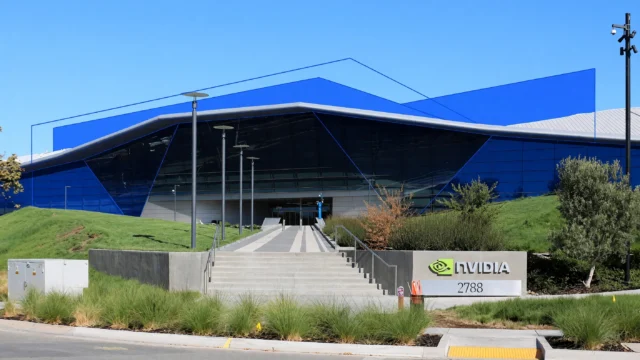
Nvidia’s Circular Investments
Nvidia has become a major investor in its own customers. It bought $2 billion of CoreWeave stock in January and held 47.2 million shares worth $4.1 billion as of September 30. In the nine months to October 25, Nvidia spent $58.1 billion on equity securities, up from $4.95 billion a year earlier. Its non-listed equity holdings rose to $61.65 billion. Three direct customers accounted for 36% of Q3 revenue. This intertwining of supplier and shareholder creates risk: a demand slowdown could hit both hardware orders and investment value.
Sector Watch: Robotics, Fusion, Defense
Construction robotics attracted $1.6 billion through October 29, more than four times all of 2025, driven by larger deals to fewer companies. Fusion energy raised $4 billion, with 11 rounds of $100 million or more. Defense tech pulled in $77.5 billion through September, already 36.8% above 2025. These sectors are absorbing capital for equipment, factories, and delivery teams, testing investors’ ability to fund manufacturing over longer cycles.
Outlook
For LPs, the clearest sign of a broader recovery in 2027 will be more cash distributions across more funds and vintages, freeing up new commitment capacity. Until then, the gap between AI-driven fundraising and old-fund liquidity remains the defining tension in venture capital.