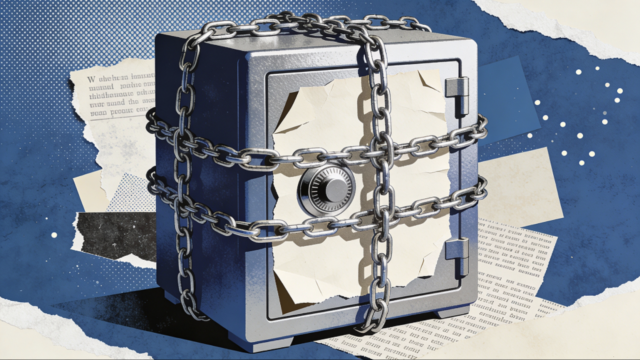
Beyond Private Keys: Why Crypto Security Needs a Holistic Approach
In the wake of numerous high-profile hacks and exploits, the crypto industry has often comforted itself with a simple mantra: “Your private keys are safe.” But according to a recent analysis, this focus on private key security can be a dangerous placebo, lulling users into a false sense of security while ignoring broader vulnerabilities in asset control, data privacy, and overall security architecture.
The core argument is that judging whether a crypto product is reliable requires looking far beyond whether private keys have been compromised. While private key management remains crucial, it is only one piece of a complex puzzle. A product can have impeccable key storage yet still expose users to significant risks through flawed smart contracts, centralized points of failure, inadequate privacy protections, or poor operational security.
The Illusion of Safety
Many crypto wallets and platforms tout their non-custodial nature and advanced key encryption as proof of security. However, the analysis suggests that this narrow focus can mask other critical weaknesses. For instance, a wallet might securely store keys but leak metadata that compromises user privacy, or a DeFi protocol might have audited code but still be vulnerable to economic attacks or governance exploits.
The recent surge in DeFi hacks, bridge exploits, and phishing attacks demonstrates that attackers are increasingly targeting the layers around the private key—the user interfaces, the smart contracts, the oracles, and the social engineering vectors. In many cases, users have lost funds without their private keys ever being exposed.
What Really Matters
So, what should users and investors look for when evaluating a crypto product? The analysis points to several key dimensions:
- Asset Control: Who truly controls the assets? Is it a non-custodial solution where the user has full sovereignty, or is there a custodian or admin key that could be compromised or misused?
- Data Privacy: How much personal and transactional data is collected, stored, and shared? Are there mechanisms to protect user privacy beyond just key security?
- Security Architecture: Beyond key storage, what are the smart contract risks, the upgrade mechanisms, the dependency on external services, and the incident response plans?
- Transparency and Audits: Are the code and operations transparent? Have there been independent audits, and how are vulnerabilities addressed?
Forward-Looking Perspective
As the crypto industry matures, the conversation around security must evolve. The “private key” narrative, while important, is insufficient. Users need to demand more comprehensive security frameworks that address the full spectrum of risks. Products that can demonstrate robust asset control, strong privacy safeguards, and a holistic security architecture will be the ones that earn long-term trust.
Regulators and industry standards bodies are also likely to shift their focus toward these broader aspects, pushing for clearer disclosures and better practices. In the end, the most reliable crypto products will be those that recognize that security is not a single feature but a continuous process encompassing technology, operations, and user education.