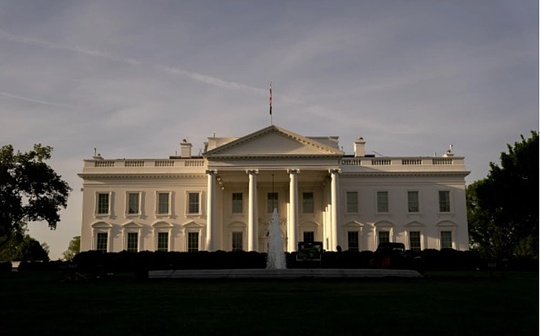
White House Reviews SEC Crypto Broker Rule Amid Market Turmoil
Cointime reports: The White House Office of Management and Budget (OMB) is reviewing a proposal from the U.S. Securities and Exchange Commission (SEC) that would clarify how broker-dealers can engage in digital asset activities. The proposal, submitted earlier this week, is part of the SEC’s effort to amend financial responsibility, recordkeeping, and reporting requirements for broker-dealers to account for crypto assets. Separately, the Commodity Futures Trading Commission (CFTC) also submitted a proposal to the OMB aimed at enhancing consumer protections in prediction markets.
The review comes as U.S. equities suffered a sharp selloff, with the Nasdaq plunging 5.52%, the Dow dropping 3.44%, and the S&P 500 falling 4.35%—its worst single-day decline since April 2025. The Nasdaq 100 lost 6.4% of its value, wiping out $2.3 trillion in market capitalization. The Philadelphia Semiconductor Index plummeted 12%, its steepest drop since 2020. Crypto markets mirrored the downturn, with Bitcoin falling 5.7% to $75,989 and Ethereum dropping 7.8% to $2,236.
Industry Analysis and Implications
The SEC’s proposal represents a significant step toward providing regulatory clarity for crypto broker-dealers, a segment that has long operated in a gray area. By explicitly addressing how traditional broker-dealer rules apply to digital assets, the SEC could pave the way for more institutions to enter the space with confidence. However, the timing is delicate: the market rout, driven by fears of aggressive Federal Reserve rate hikes and geopolitical tensions, underscores the fragility of investor sentiment.
The CFTC’s parallel move on prediction markets suggests a broader regulatory push to address emerging crypto-adjacent products. Prediction markets, which allow users to bet on event outcomes, have gained traction but lack clear consumer safeguards. The CFTC’s proposal could set a precedent for how such platforms are regulated.
Forward-Looking Perspective
As the OMB reviews these proposals, the crypto industry watches closely. Clear rules could attract institutional capital and foster innovation, but overly restrictive measures might stifle growth. The market’s sharp reaction to macroeconomic factors also highlights the need for regulatory predictability to cushion against volatility. If the SEC and CFTC succeed in crafting balanced frameworks, they could restore confidence in U.S. crypto markets—but the road ahead is fraught with political and economic uncertainty.