Gate Exchange Introduces PoSEC Proof of Security, Reports 104.58% Cold Storage Coverage
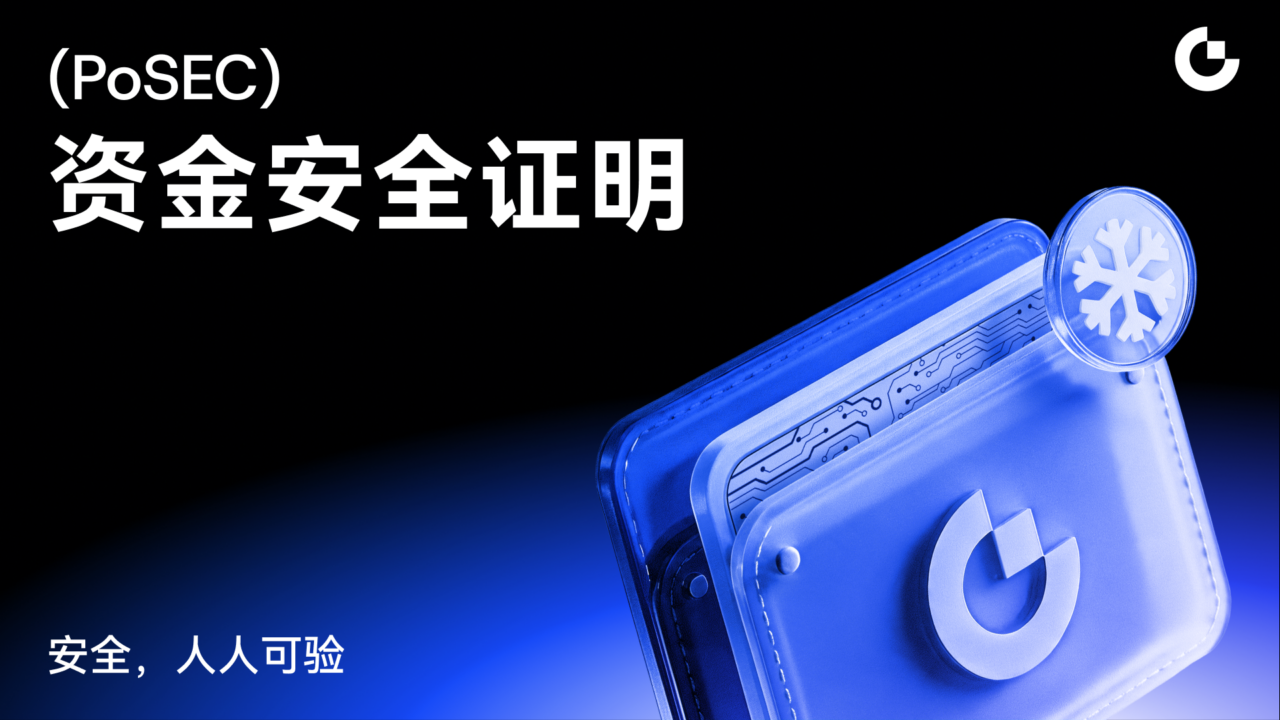
Gate, a major cryptocurrency exchange, has launched a new proof-of-security mechanism called PoSEC, which it says provides verifiable evidence of both the sufficiency and the structural safety of user fund reserves. Its cold storage coverage ratio stands at 104.58%, meaning that assets held in cold storage exceed total user liabilities by more than 4.5%.
Beyond Traditional Proof of Reserves
Most proof-of-reserves (PoR) systems focus narrowly on whether an exchange holds enough assets to cover customer deposits. PoSEC extends this by verifying the storage architecture—specifically, how much of the reserves are held in cold storage versus hot wallets—and the risk coverage capacity of those reserves. This addresses a critical gap: an exchange could technically be fully reserved but still hold most assets in hot wallets vulnerable to hacks or operational failures.
Gate’s 104.58% cold storage coverage ratio indicates that all user funds are held in cold storage, with an additional buffer. The exchange claims that PoSEC provides a more holistic view of fund safety by combining reserve adequacy with storage structure and risk mitigation.
Industry Implications
The move comes amid heightened scrutiny of exchange solvency and security following high-profile collapses and hacks in recent years. Regulators and users have increasingly demanded transparency, and proof-of-reserves has become a baseline expectation. However, PoR alone has been criticized for its limitations—it is often a point-in-time snapshot and does not reveal how funds are stored or whether they are encumbered.
PoSEC could set a new standard by forcing exchanges to disclose not just the quantity but the quality of reserves. If adopted more widely, it could improve trust in centralized exchanges and reduce the risk of another FTX-style collapse. However, the effectiveness of PoSEC depends on independent verification and standardized reporting. Gate has not yet disclosed whether the PoSEC attestations will be audited by a third party or how frequently they will be updated.
Forward-Looking Perspective
As crypto markets mature, security and transparency will become key differentiators among exchanges. Gate’s PoSEC initiative is a step toward more comprehensive risk disclosure, but industry-wide adoption will require coordination among exchanges, auditors, and regulators. If PoSEC gains traction, it could evolve into a de facto standard for exchange safety, similar to how PoR became expected after 2022. For now, Gate’s 104.58% cold storage coverage provides a strong signal, but the market will watch whether other exchanges follow suit and whether users demand this level of transparency as a minimum.