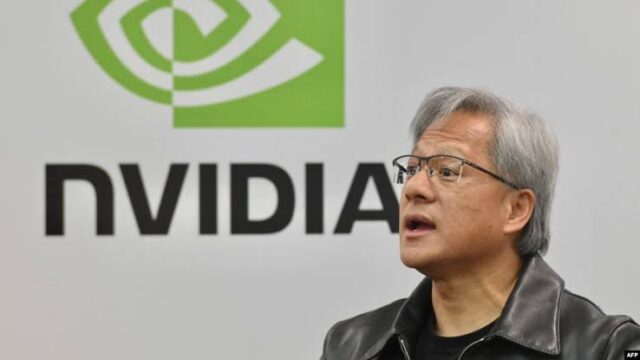
Why Jensen Huang’s Departure Is Inevitable: The Case for New Leadership at Nvidia
The unprecedented surge in AI hardware and semiconductor investment during Jensen Huang’s tenure has been nothing short of revolutionary. Yet, as the industry matures, the argument that Huang must step down gains traction. This analysis explores the rationale behind the call for new leadership at Nvidia and its implications for the AI and crypto sectors.
The Investment Boom and Its Discontents
Under Huang’s leadership, Nvidia has become the backbone of the AI revolution, with its GPUs powering everything from large language models to autonomous vehicles. The company’s market capitalization has soared, and its technology has become indispensable. However, this success has also led to concerns about market concentration, supply chain vulnerabilities, and the sustainability of such massive capital expenditure. Critics argue that a fresh perspective is needed to navigate the next phase of growth, which will likely be characterized by diversification and more efficient resource allocation.
Implications for the Crypto and AI Intersection
The crypto industry has increasingly intertwined with AI, particularly through decentralized compute networks and GPU-based mining. Nvidia’s dominance in GPU supply has made it a critical player in this space. A leadership change could signal a shift in strategy—perhaps towards more open collaboration with decentralized networks or a focus on specialized AI chips that could disrupt existing crypto mining operations. For investors and builders in the crypto-AI space, understanding these potential shifts is crucial for strategic planning.
Forward-Looking Perspective
As AI continues to evolve, the need for adaptive leadership becomes paramount. Whether Huang stays or goes, the semiconductor industry must address challenges such as geopolitical tensions, environmental sustainability, and the ethical deployment of AI. For the crypto community, the key takeaway is to monitor leadership changes and strategic pivots at major hardware players, as these will directly impact the infrastructure that underpins decentralized AI and blockchain networks. The next era of AI hardware will require not just technological innovation but also a new vision for global collaboration and governance.