Introduction
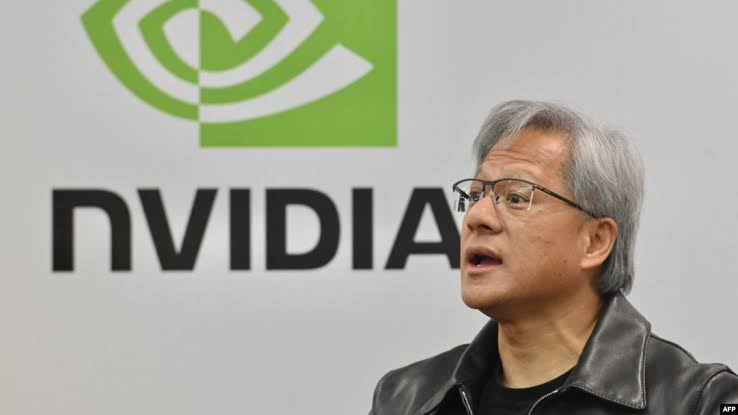
Cointime reports: On November 12, 2026, NVIDIA announced that founder Jensen Huang has resigned from his roles as President, CEO, and Director, effective immediately. The decision ends his 33-year leadership tenure at the company. Current Chief Financial Officer Colette Kress has been appointed interim CEO while continuing as CFO, and the board has simultaneously initiated an internal and external search for a successor. Long-serving director Harvey C. Jones has been named the company’s first Board Chairman.
Before and after the announcement, NVIDIA’s stock price swung sharply, and the U.S. AI supply chain and crypto markets came under pressure in turn. The market’s most pressing question is not short-term price movement, but whether a company known for its technological judgment and risk appetite can stay on its original trajectory after its strategic core figure departs.
I. From Controversy to Resignation: How Events Unfolded
According to reports, the controversy began on November 8. Jensen Huang publicly acknowledged a scandal involving a personal relationship and apologized to his family and employees. Related supply chain companies said they were willing to cooperate with a U.S. Department of Commerce investigation. On November 11, media disclosed rumors of a relationship with another internal executive, further increasing pressure on management.
On November 12, NVIDIA’s official announcement confirmed his resignation. Meanwhile, Congress also took action: three committee chairmen sent a joint letter requesting his attendance at a closed-door interview on December 1; according to CNBC, Huang has agreed to testify before Congress before Thanksgiving on November 26.
The company’s internal atmosphere was not calm. Employees spontaneously launched a retention vote on the internal network, with over 97% of participants hoping he would continue as CEO; hundreds of employees also signed a joint petition asking the board to reconsider the personnel change and calling for a reshuffle of the current board.
II. Market Reaction: Market Cap, Stock Price, and Crypto Linkage
According to CBS News, from the close on November 7 to November 12, NVIDIA’s market capitalization fell by nearly $500 billion. The stock dropped from a recent high of $193.41 before the controversy to a recent low of $151.09, a decline of 21.88%; at the time of writing, it was at $166.19.
In traditional markets, on November 12 the Dow fell 189.40 points, or 0.36%, to close at 52,297.09; the S&P 500 fell 0.35% to close at 7,592.40; the Nasdaq fell 0.39% to close at 25,366.09. The MSCI World Index also declined 0.44%.
Because AI tech stocks and crypto markets are linked through risk appetite, the crypto sector came under pressure in tandem. CoinGecko data shows: BTC fell 6.6% in 24 hours and 9.5% over 7 days, at $68,800; ETH fell 6% in 24 hours and 13.7% over 7 days, at $1,935.08; BNB, SOL, and ZEC fell about 9%, 13.2%, and 29.1% over 7 days, respectively.
III. The Interim Leader: Can a Financial Perspective Continue the Tech Risk-Taking?
Colette Kress has been at NVIDIA for over 13 years and is familiar with the company’s financial structure, customers, and supply chain. She previously oversaw financial management and participated in earnings communications for a long time; before joining NVIDIA, she worked at Microsoft, Cisco, and Texas Instruments. Internally, she is seen as a manager who emphasizes financial discipline and has previously raised differing views on some customer financing and AI infrastructure investments.
Analysts’ doubts center on one point: NVIDIA’s competitive advantage comes not only from chip design but also from its judgment of technology trends, iteration speed, and global partnership network. Anshel Sag, principal analyst at Moor Insights and Strategy, said that Kress as interim leader is meaningful for stabilizing the market, but she may not possess the vision needed to sustain the company’s long-term trajectory.
If a financially oriented manager ultimately takes over, the company may place more emphasis on return on capital, customer financing risk, and cash flow management; on U.S. policy, its posture may also lean toward accumulating capital and building broad goodwill rather than the previous head-on approach.
IV. Strategic Roadmap: Unchanged in the Short Term, to Be Verified in the Long Term
NVIDIA’s board stated in the announcement that the company’s operations, customer commitments, and product roadmap will continue and will not be interrupted by the transition. The current core direction remains AI computing infrastructure, including the Blackwell platform, Vera Rubin platform, AI factories, and robotics.
It is important to distinguish: the roadmap being unchanged does not mean execution capability is unchanged. Jensen Huang previously not only oversaw strategic direction but was also deeply involved in product launches, customer communications, and technology planning; whether the new CEO can maintain the original pace of innovation is a variable that requires continued observation.
V. Public Opinion and Institutions: Polarized Views and Long-Term Estimates
Public statements are polarized. Trump suggested Cook should take over; a16z published a tribute, and Musk reposted it with “Jensen”; Naval Ravikant said Jensen Huang is irreplaceable; podcast host Lex Fridman compared the change to “Apple firing Jobs” and expressed a different view.
Institutional research is relatively calm. Oppenheimer analysts noted in a research report that even if financial results are solid, short-term fundamentals will take a back seat, and Huang’s departure may continue to weigh on the stock price.
Bank of America compared two 2030 scenarios:
Table
| Metric | Jensen Huang Stays | Jensen Huang Departs |
|---|---|---|
| Market Share | 72% | 50% |
| Gross Margin | 73% | 65% |
| Gross Profit | $930 billion | $630 billion |
| Long-Term Enterprise Value | — | Shrinks by about $1.4 trillion |
Under this estimate, gross profit would decrease by about $300 billion in the departure scenario. It should be noted that this is an institutional projection based on hypothetical scenarios, not a certain outcome.
VI. What to Watch Next
Four threads can be tracked going forward:
- Successor: internal promotion or external hire, and whether the background is more technical or financial;
- Strategic continuity: whether the pace of product iteration, customer financing policy, and posture on U.S. exports are adjusted;
- Congressional hearing: progress and disclosures from the testimony before November 26;
- Core team stability: whether key engineers and business leaders stay.
Short-term stock prices are driven by sentiment and events, while long-term value still depends on whether the company can maintain its technological judgment, ecosystem advantages, and execution speed after the transition. Before a formal successor is settled, NVIDIA’s direction remains in a zone of high uncertainty.