Tokenized High-Yield Fund Breaks New Ground as DeFi Collateral
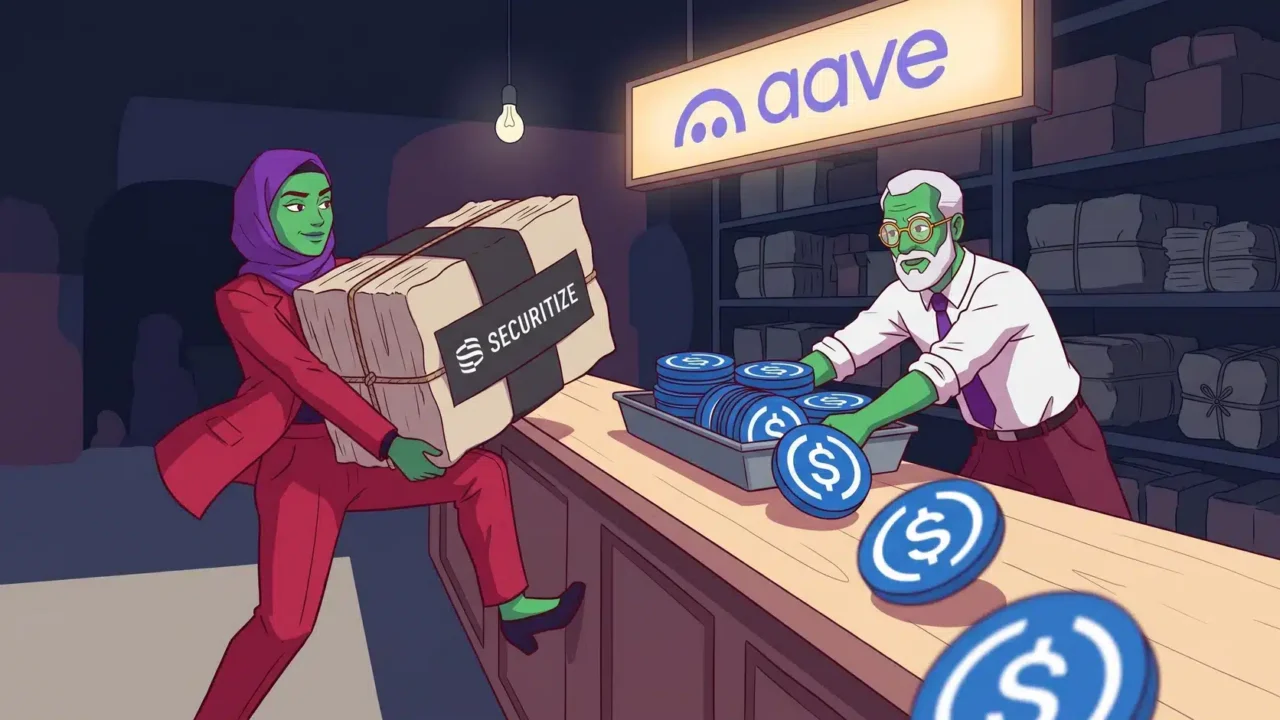
Cointime reports: Securitize’s high-yield fund HINC has gone live as collateral on Aave Horizon, the lending protocol’s institutional market. Qualified holders of the tokenized junk-bond fund can now pledge their HINC tokens to borrow stablecoins without redeeming the underlying assets. This marks a significant step in the convergence of traditional finance and decentralized finance, enabling real-world assets to function as productive collateral within DeFi lending markets.
What This Means for Institutional DeFi
The integration allows institutional investors to unlock liquidity from their high-yield bond holdings while maintaining exposure to the fund’s returns. By using HINC as collateral on Aave Horizon, borrowers can access stablecoin loans, which can be deployed for other investments or operational needs. This creates a new avenue for yield generation and capital efficiency, blurring the lines between traditional asset management and on-chain finance.
Aave Horizon is designed for institutional participants, offering a permissioned environment with enhanced compliance and risk management features. The addition of HINC as collateral expands the range of real-world assets (RWAs) that can be used within DeFi, potentially attracting more traditional investors seeking to leverage their holdings without selling.
Implications for the RWA Market
The move is part of a broader trend where tokenized real-world assets are being integrated into DeFi protocols. Securitize, a leading platform for digital securities, has been at the forefront of tokenizing assets such as bonds, funds, and private equity. The HINC fund, which focuses on high-yield junk bonds, represents a higher-risk, higher-return asset class that could appeal to sophisticated investors looking for yield in a low-interest-rate environment.
However, the use of junk bonds as collateral raises questions about risk management. The volatility and credit risk associated with high-yield bonds could pose challenges for Aave’s risk framework. The protocol will need to ensure that collateral factors and liquidation mechanisms are robust enough to handle potential price swings. Additionally, regulatory considerations around the tokenization of securities and their use in DeFi remain complex and vary by jurisdiction.
Forward-Looking Perspective
The successful integration of HINC as collateral on Aave Horizon could pave the way for more tokenized funds to be accepted in DeFi lending markets. As regulatory clarity improves and infrastructure matures, we may see a wider array of RWAs—from real estate to commodities—being used as collateral. This could significantly enhance liquidity and capital efficiency in both traditional and decentralized finance, creating a more interconnected financial ecosystem.
For now, the collaboration between Securitize and Aave signals a growing appetite for institutional-grade DeFi solutions. It will be important to monitor how the market responds, particularly in terms of borrowing demand and risk parameters, as this could set a precedent for future RWA integrations.