Brooklyn DA Dismantles Double-Dip Crypto Scam Targeting Russian Speakers
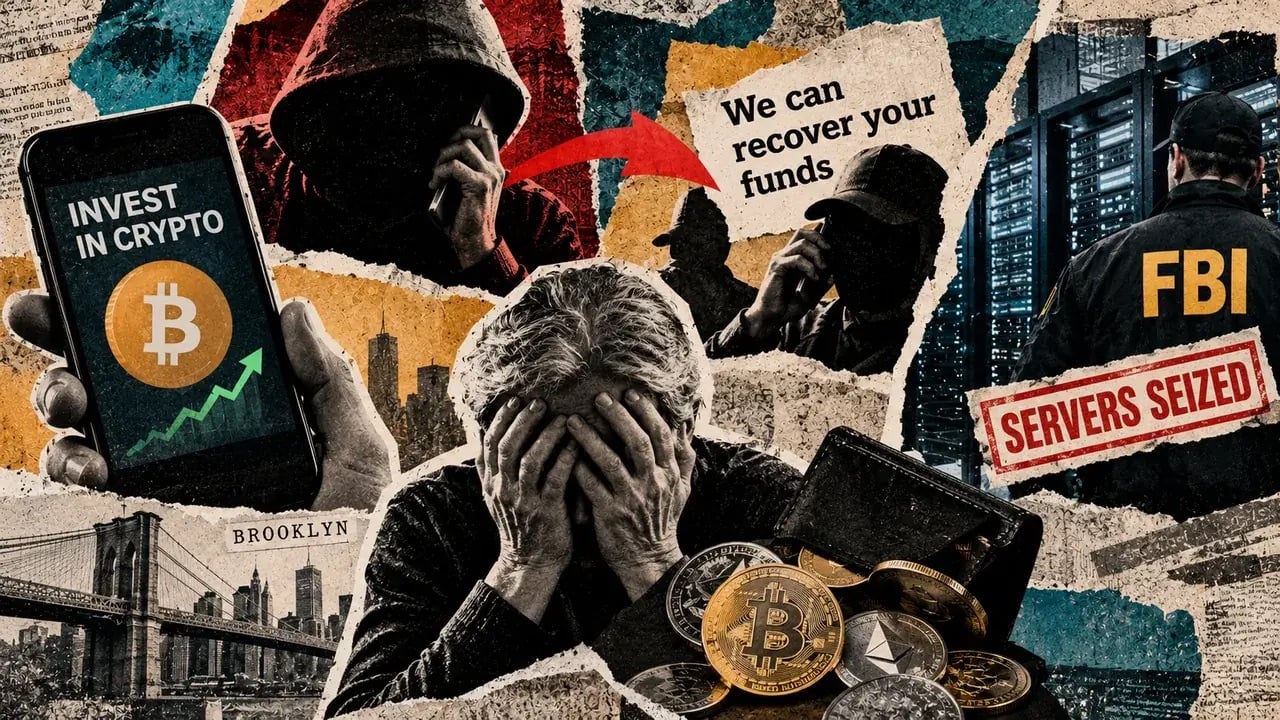
Brooklyn prosecutors have exposed a transnational crypto fraud that not only drained victims’ savings but returned weeks later to extort more money under the guise of recovering lost assets. The three-year investigation, aided by the FBI, led to the takedown of 112 servers and 241 websites tied to the scheme, which is believed to have stolen tens of millions of dollars from victims across the United States.
How the Scam Worked
The operation began with Russian-language Facebook ads promoting crypto investment opportunities. Victims were connected to fake consultants who guided them to phishing trading platforms. After deposits were made, withdrawal requests were blocked, and victims were told to pay additional fees or taxes. Weeks later, the same criminals recontacted victims, offering to recover their stolen funds for an upfront payment—a classic “recovery scam” that leverages the initial loss.
Brooklyn District Attorney Eric Gonzalez said many victims, concentrated in Brooklyn’s large Russian-speaking community, lost their life savings. The scammers used infrastructure hosted in Ukraine and other Eastern European countries, along with cloud servers in the U.S., to maintain persistent contact with victims.
Infrastructure Takedown
Rather than just seizing domains, investigators executed search warrants and coordinated with private firms—Shadowserver, Coeus, and UltaHost—to shut down cloud servers across three time zones. This aimed to disrupt the scammers’ ability to rebuild quickly and to access stored victim data used for secondary extortion.
Despite the takedown, only about $300,000 has been seized, and no arrests or victim reimbursements have been announced. The majority of stolen funds remain untraced.
Implications and Outlook
The case highlights the growing sophistication of crypto fraud, where criminals exploit the same victim base multiple times. It also underscores the importance of targeting backend infrastructure, not just front-end websites, to prevent rapid resurgence. However, the limited recovery of funds illustrates the challenge of tracing and reclaiming crypto assets once they are moved across borders.
As crypto adoption grows, especially among immigrant communities, education and cross-border law enforcement cooperation will be critical. The Brooklyn DA’s office has already shut down about 400 crypto scam domains, but without coordinated global action, scammers will continue to adapt.