Nasdaq’s Wild Swing Exposes AI Trade’s Fragile Foundation
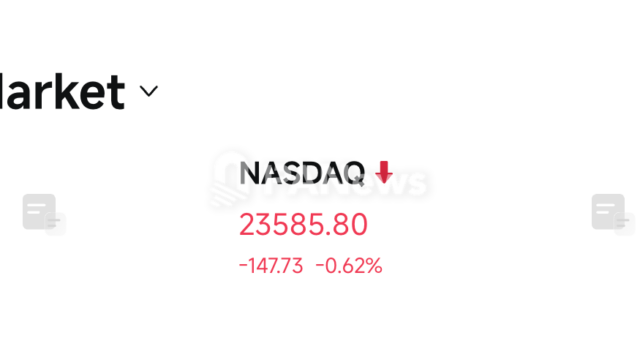
Cointime reports: On Wednesday, the Nasdaq 100 plunged nearly 5% in the first 15 minutes of trading, briefly entering bear-market territory, before staging its largest intraday rebound since April 2025 to close down just 1%. The Dow Jones Industrial Average eked out a 0.3% gain. The violent reversal underscores mounting anxiety over the sustainability of the AI boom.
Market Analysis
The recovery was fueled by a mix of factors: FCC authorization for SpaceX to deploy satellites for space-based data centers, short covering after the bear-market touch, and renewed yen carry-trade activity. Michael Burry also disclosed he had closed his remaining Nasdaq 100 put positions. Yet the underlying concerns remain unresolved.
Nvidia, the linchpin of the AI trade, fell 3.9% on Wednesday, erasing nearly half of the gains from Monday’s rally that followed the reinstatement of CEO Jensen Huang. The episode highlighted deeper governance issues: S&P Global Ratings placed Nvidia’s AA credit rating on negative watch, citing “vulnerabilities in Nvidia’s management and governance framework.” Meanwhile, credit default swaps on hyperscale data centers hit record highs, and CoreWeave’s 2031 bonds traded near 72 cents on the dollar, a historic low.
Investors are increasingly focused on when massive AI capital expenditures will translate into actual profits. As Joseph Zidle of Cresset Capital noted, “This is far more significant than the Huang dismissal. Skepticism was already spreading before that.” The market is now pricing in a peak in hyperscaler capex next year and a decline by 2028.
Forward-Looking Perspective
History offers some comfort: in non-recessionary bear markets since 2000, the Nasdaq 100 has already seen 92% of its ultimate decline when it crosses the 20% threshold, and a bottom typically forms within two trading days. The median 12-month return after confirmation is 43.1%. However, the credit market’s alarm bells—rising spreads and record CDS levels—suggest that the AI trade’s lifeblood, credit investors, are growing increasingly nervous. With geopolitical conflicts, persistent inflation, and political uncertainty creating a “perfect storm,” volatility in tech stocks is unlikely to subside soon.