SoftBank’s Robotics Bet: Masayoshi Son’s $100B Pursuit of Physical AI
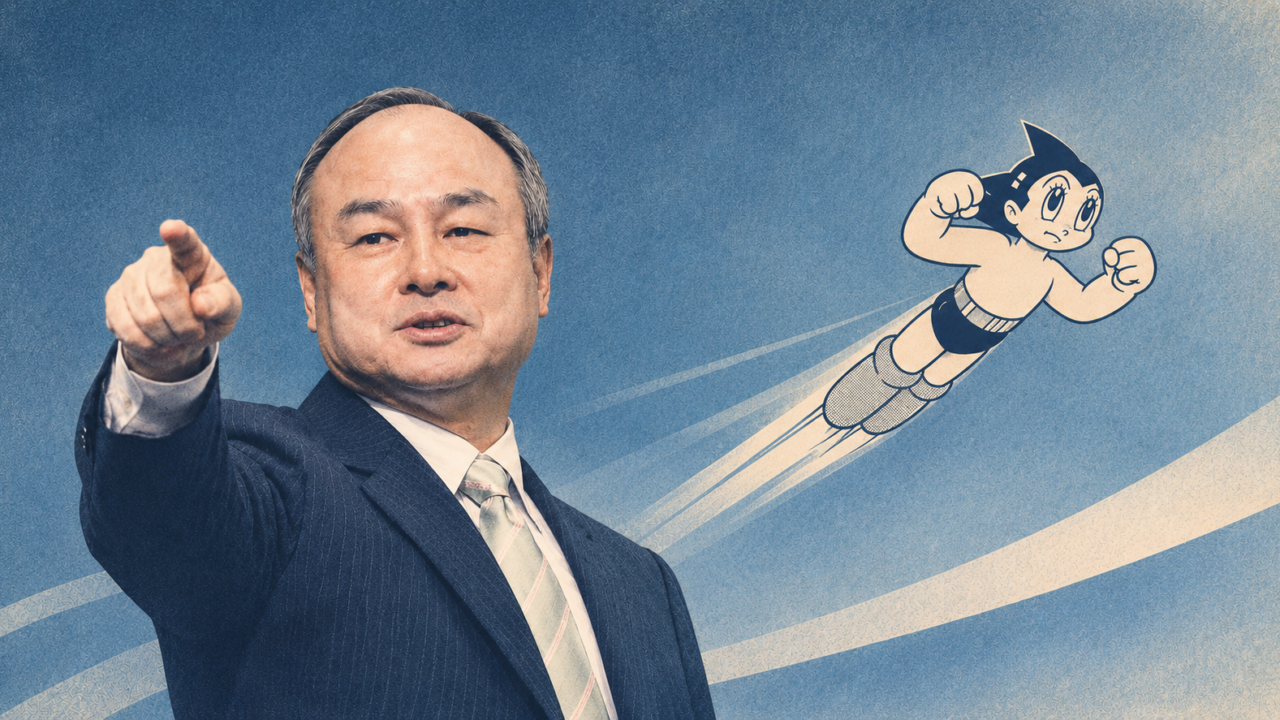
Masayoshi Son, SoftBank’s 69-year-old founder, is making a renewed push into robotics, driven by a vision of artificial superintelligence (ASI) that he first outlined over a decade ago. This time, the strategy focuses on artificial intelligence rather than hardware, with SoftBank building a portfolio of over 30 companies in physical AI.
From Pepper to Physical AI
Son’s earlier robotics ventures—the Pepper humanoid and Boston Dynamics—struggled commercially. Pepper was discontinued in 2020 after producing only 27,000 units, and Boston Dynamics was sold to Hyundai in 2020 after accumulating heavy losses. But Son’s conviction in intelligent robots has only grown. In SoftBank’s 2026 annual report, he extended his entrepreneurial timeline by 10-15 years to pursue ASI, identifying AI models, semiconductors, AI infrastructure, and robotics as the four cornerstones of the coming era.
Building a Robotics Ecosystem
SoftBank has been assembling a broad robotics portfolio:
- Skild AI: A $1.4 billion Series C round in January 2026 valued the general-purpose robotics foundation model company at over $14 billion.
- Agile Robots: A $500 million Series F round in November 2026 valued the German industrial robotics firm at $8.5 billion.
- 1X Technologies: SoftBank is reportedly in talks to acquire a controlling stake at a $6 billion valuation.
- AutoStore and Berkshire Grey: Warehouse automation plays with clear commercial traction.
- RAI: Acquired in November 2026, the research institute founded by Boston Dynamics’ Marc Raibert focuses on fundamental robotics AI.
Additionally, SoftBank agreed to acquire ABB’s robotics business for $5.375 billion in October 2025, though the deal has encountered regulatory hurdles in China.
Financial and Strategic Challenges
SoftBank’s aggressive investment strategy comes with rising financial risk. Its five-year credit default swap spread widened to 534.6 basis points in November 2026, the highest since October 2022, while financing costs surged to ¥461.9 billion in the July-September quarter, 2.6 times year-on-year. The group’s finances are increasingly tied to the valuation of AI-related assets, including Arm and OpenAI.
Moreover, integrating robotics companies across different countries and technological approaches faces geopolitical and regulatory obstacles, as evidenced by the ABB setback. The long development cycles and uncertain commercialization timelines for advanced robotics add further risk.
Forward-Looking Perspective
Son’s vision of physical AI—where intelligent machines perform manufacturing, construction, agriculture, and research—is technologically more feasible today than a decade ago. However, as the Pepper and Boston Dynamics experiences show, correct foresight does not guarantee commercial success. SoftBank’s ability to synthesize its portfolio into a cohesive ecosystem, while managing financial strain, will determine whether Son’s latest robotics dream becomes reality.