Pigeons Turned Into Cyborg Drones for Hire
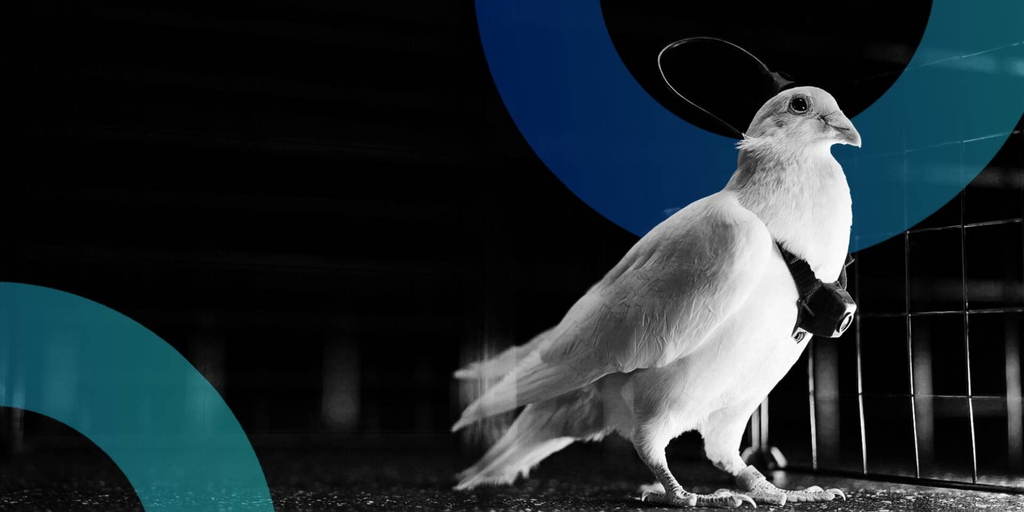
Cointime reports: Russian neurotechnology company Neiry has begun accepting orders for aerial photography using live pigeons equipped with brain implants. The service, called “biodrones,” conducted its first outdoor flight trials in November 2025 and is now in beta, available only in Russia, with prices starting at 300,000 rubles (roughly $3,800) per square kilometer.
Neiry’s setup involves surgically implanted electrodes, a lightweight controller, solar panels, and a camera. Electrical stimulation encourages the birds to turn in a desired direction while they retain natural flight behavior. Operators can guide the birds remotely or upload a planned route. The company claims its longest trial lasted over 10 hours, with operators guiding birds from more than 62 miles away, and that it has completed over 100 flights outside the lab and taken more than 1,000 photographs.
Pigeon vs. Machine
Unlike conventional drones, pigeons can navigate around obstacles autonomously and do not rely on batteries for propulsion—though their onboard electronics still need power. Neiry says the birds can fly where drones face restrictions, and their inconspicuous appearance raises potential surveillance and espionage concerns. The company is targeting infrastructure inspections and environmental monitoring, with potential search-and-rescue applications. It blurs faces using AI before handing images to customers and has identified Brazil and India as potential markets.
Animal welfare remains a concern. Neiry says it follows an approved ethical protocol, but independent evidence of the implants’ long-term effects on the pigeons is unavailable. The company says its researchers aim for a 100% survival rate during surgery—a goal, not a demonstrated outcome.
Industry Implications
The development highlights the growing blur between biological and mechanical systems in surveillance and data collection. While not a crypto story per se, it underscores broader trends in neurotechnology and autonomous systems that could eventually intersect with decentralized data markets and tokenized physical assets. The use of live animals as data-gathering platforms raises ethical and regulatory questions that may shape future frameworks for biohybrid technologies.
Forward-Looking Perspective
Neiry’s biodrones represent an early commercial step in brain-computer interfaces applied to animals. As the technology matures, expect scrutiny over animal welfare, privacy, and dual-use risks. For the crypto and RWA sectors, the case serves as a reminder that real-world asset tokenization and decentralized physical infrastructure networks (DePIN) will increasingly grapple with unconventional data sources and the ethical boundaries of automation.