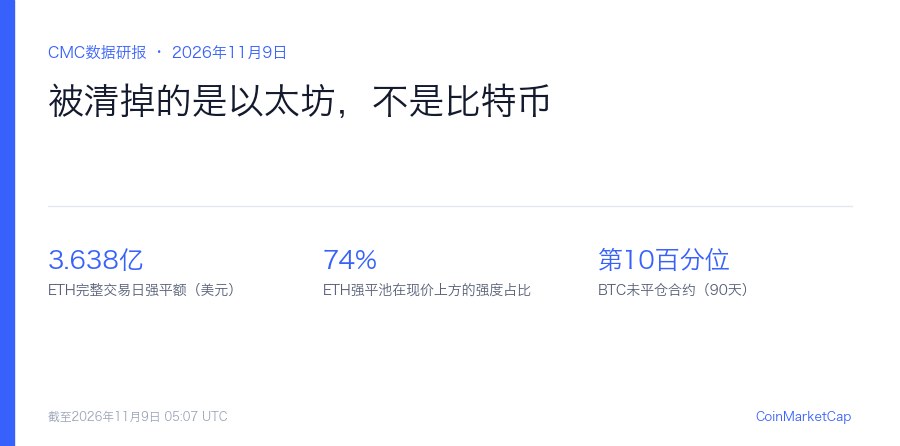
Ethereum Takes the Brunt of Sunday’s Liquidation Cascade
Sunday’s crypto market sell-off wiped out $363.8 million in Ethereum positions, a figure more than 50% higher than Bitcoin’s liquidations over the same period. The forced selling was heavily skewed toward longs, which accounted for 91% of the Ethereum total, signaling that traders had been aggressively positioned for further upside before the drop.
On a full trading-day basis, Ethereum’s liquidation volume reached 4.22 times its 30-day average—the largest single-day multiple in the observed window. The scale of the flush suggests a significant leverage reset rather than a broad-based exodus from the asset.
Liquidation Fuel Shifts Above Spot Price
Post-cascade, the liquidation heatmaps on Binance show a notable shift: the “liquidation fuel” on both ETH and BTC stepped ladders has migrated above the current spot price. Ethereum accounts for 74% of that upward-skewed fuel. In practical terms, this means the next wave of forced liquidations is more likely to be triggered by a move higher—squeezing late shorts—rather than by further downside. The market’s pain trade has flipped direction.
This repositioning is consistent with a market that has cleared out weak long hands and is now rebuilding exposure. The concentration of liquidation clusters above spot creates a magnet effect that could accelerate any upward move, particularly in ETH.
Open Interest Rebuilds Unevenly
Across the entire market, open interest was rebuilt by 13.8% over the same week. Yet Bitcoin’s own open interest actually fell by 4.8%, a divergence that underscores where risk appetite is returning. Capital is rotating toward Ethereum and, likely, altcoins, while Bitcoin derivatives see a more cautious rebuild.
This pattern often precedes periods of outperformance for higher-beta assets. Ethereum’s larger liquidation event and faster open-interest recovery suggest traders are treating the dip as an opportunity to re-leverage into ETH rather than retreat to Bitcoin.
Forward-Looking Perspective
The key question is whether the rebuilt leverage is sustainable. With liquidation fuel now stacked above spot, a short squeeze could provide a sharp rally, but it also leaves the market vulnerable to another cascade if the move fails to hold. Traders should watch funding rates and the pace of open-interest growth in the coming sessions for signs of overheating.
For now, the data points to a market that has absorbed a violent deleveraging event and is repositioning with a bullish tilt—especially in Ethereum. The $363.8 million flush may prove to be a cleansing moment rather than the start of a deeper decline.