Bitcoin’s Healthy Pullback: A Leverage Reset, Not a Trend Break
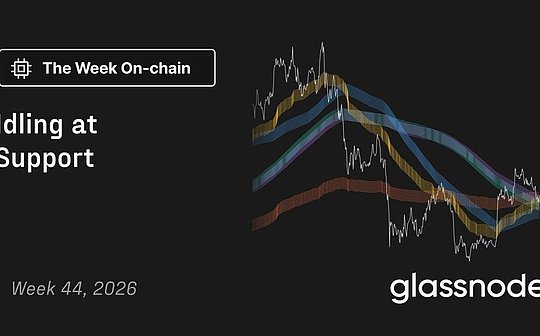
Cointime reports: Bitcoin has retraced roughly 10% from its September high, returning to the price levels it broke through in August. The pullback has triggered a significant reset in market leverage and investor profitability, but has not broken the structural uptrend established in August.
Short-Term Holders Underwater
At the start of October, nearly all short-term holders (those who bought within the last 155 days) were in profit, with the short-term holder profitable supply ratio sitting above 97.5%—a level Glassnode marks as the ‘sell line.’ After the 10% decline, that ratio has dropped to about 38%, meaning most recent buyers are now underwater. The market is far less stretched than it was a month ago. A recovery above 50% while price stabilizes would signal that new buyers are back in profit and confidence is returning.
Retesting the Breakout
Bitcoin is now retesting key levels it reclaimed in August, including the 200-day moving average, the short-term holder cost basis, and the true market mean. The true market mean sits at $77,700, while the short-term holder cost basis is at $75,700. On November 3, price briefly closed below the true market mean and dipped to $76,100 overnight before recovering. Such retests are normal after a breakout; as long as Bitcoin holds these levels, the August structure remains intact.
Leverage Cleared, Shorts Building
The decline from the September high has wiped out much of the long leverage that accumulated since August, reducing the risk of cascading liquidations. Remaining long liquidation clusters lie between $73,000 and $76,000, coinciding with the short-term holder cost basis and the 200-day moving average. Above the price, liquidation levels have been increasing over the past week even as price fell, indicating traders are adding shorts. The largest cluster is around $87,000, near the September high. If price turns up, these shorts would need to cover, potentially fueling a rally toward that level.
Options Skew Bullish
The options market shows a bullish tilt: across all expiries, traders hold about $18 billion in call options versus $13 billion in puts. The largest December call positions are at $80,000, $90,000, $100,000, and $120,000, while the largest put positions are at $60,000 and below as deep downside protection. This points to a bullish setup for year-end, though open interest alone doesn’t reveal who is buying or selling—some calls may be sold for premium.
Volume Holds, ETF Outflows Continue
Spot and ETF volumes have pulled back from the August breakout but remain about 1.5 times the pre-breakout level on a 7-day average. This suggests the attention drawn by the August rally has not left the market. However, U.S. spot ETFs have seen nearly $1 billion in net outflows over the past two weeks, with a single-day outflow of $640 million on November 2. Glassnode interprets this as a market driven by crypto-native capital, with little new money from traditional investors. ETF flows tend to follow price rather than lead it, so their absence is less concerning than it appears.
Relative Strength vs. Equities
Bitcoin has held up relatively well against traditional assets. Over the past two months, it fell about 2%, roughly in line with the S&P 500’s decline of less than 1%, and outperformed European stocks and gold, which fell about 9%. Its win rate against the S&P 500 over the past 90 trading days has returned to 50%, the first time it has not been below 50% since March 2025. If the win rate can break above 50% and hold, it would signal Bitcoin is regaining relative strength.
Shrugging Off Record Hack
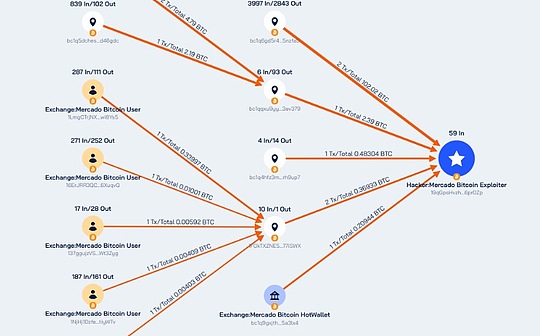
Bitcoin barely reacted to the largest hack in crypto history—a $6.3 billion exploit disclosed on October 29—falling only about 3% before recovering to pre-hack levels. Such a muted response to terrible news is a sign of strength. However, it does not change the lack of new demand from outside crypto seen in ETF data. If that demand returns, a market that has already absorbed a shock of this magnitude has room to move quickly.
Midterm Elections and Altcoin Shakeout
Democrats won both chambers in the November 3 midterm elections. Historically, Bitcoin has fallen 15% to 50% in the two to ten weeks after midterms before hitting a cycle low. This time, most of the decline occurred before the vote: Bitcoin fell about 11% from its September high to Election Day and has risen about 1.5% since. Meanwhile, altcoins have seen a deeper correction: the share of tokens with short-term holders selling at a profit dropped from about 80% in late September to about 12% in late October, meaning most are now selling at a loss. This cleanup of recent gains provides a healthier starting point for altcoins if Bitcoin holds its retest.
Conclusion
Bitcoin has digested September’s excesses: short-term holders have gone from near-universal profit to majority losses, altcoin holders are selling at a loss, and price is retesting the August breakout levels. Volume has held up, the record hack barely moved price, but new money from outside crypto is still absent. This offers a better risk-reward ratio than at September’s high. Watch the $73,000-$76,000 zone—where the short-term holder cost basis, the 200-day moving average, and a cluster of long liquidations converge. If it holds, this pullback is a healthy reset within the August uptrend. A sustained break below $73,000 would point to a longer consolidation.