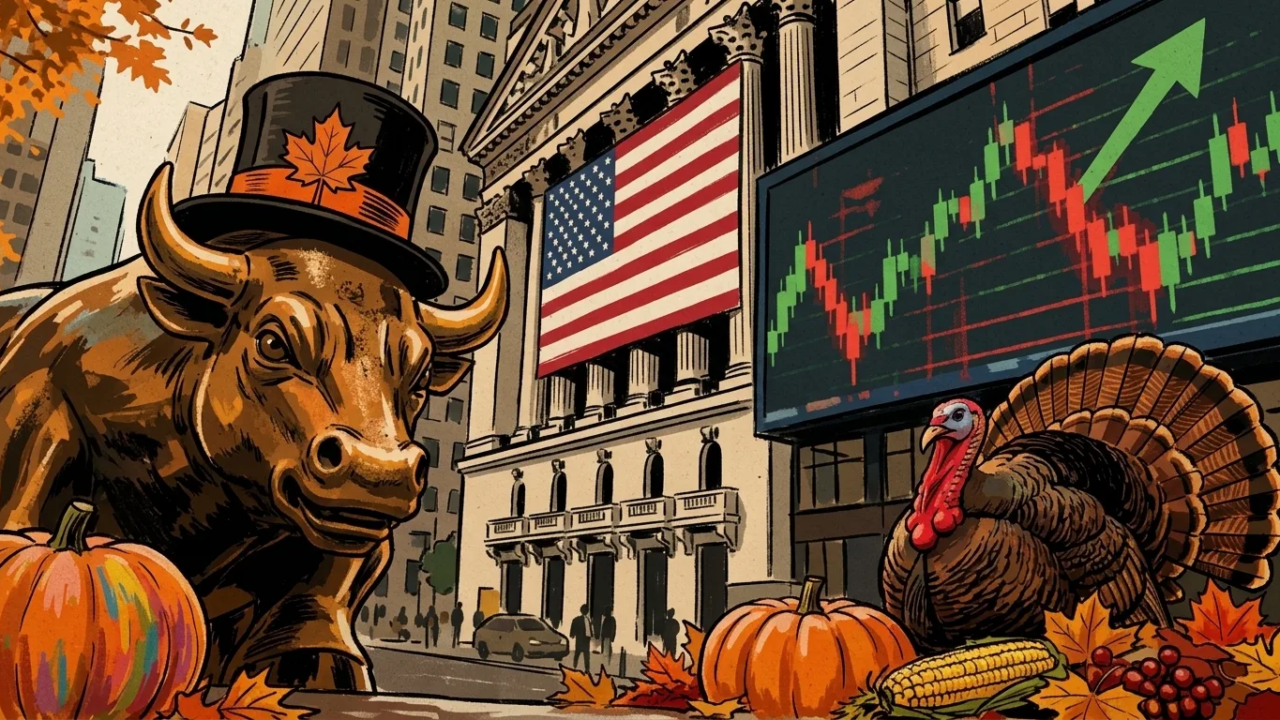
Thanksgiving Cheer Meets Market Reality
Wall Street’s holiday optimism is being tested as major assets retreat. The S&P 500 fell as much as 3.2% intraday before closing down 0.25%, while the Nasdaq dropped over 4% before ending 0.62% lower. Bitcoin hovered near $60,000, gold hit a one-year low, and the dollar stayed near yearly highs. The usual Thanksgiving rally has been muted by inflation, tariff tensions, tech stock reassessment, and capital outflows.
Historical Patterns Under Pressure
Data from Exent shows the S&P 500 rose in 53 of 76 Thanksgiving weeks since 1950, averaging a 0.7% gain. But in the past 20 years, the probability of a Black Friday gain has fallen to 50%, with a median return of -0.04%, effectively a coin flip. Algorithmic trading and faster information dissemination have eroded the holiday edge.
This year, the rally front-ran the holiday. The S&P 500 had already fallen 8.83% in November before Thanksgiving week, yet it surged 3.94% during the week through Nov. 25, far above the historical average. The move looks more like a rebound from oversold conditions than a healthy seasonal lift.
Institutional Caution vs. Retail Optimism
Hedge funds have cut risk exposure for five consecutive weeks, adding short positions in stocks, index futures, and ETFs. Goldman Sachs estimates that trend-following funds could sell $28.6 billion to $80.6 billion in the coming week regardless of market direction. In contrast, retail investors poured about $150 billion into U.S. equity ETFs and mutual funds over the past month. The VIX near 27, well above its long-term median of 17.6, signals lingering anxiety.
Bitcoin’s Holiday Narrative Falters
The Thanksgiving ‘talk to your family about Bitcoin’ story has lost its power. In the past 10 years, Bitcoin’s Thanksgiving week gain probability has dropped to 40%, with an average return of -0.73%. Trading volume during holidays has also fallen, down about 31.3% on average from 2022 to 2025 compared to regular days. With institutions and ETFs dominating, crypto liquidity now follows Wall Street’s calendar.
Deribit will settle about 111,800 BTC in monthly options on Black Friday, releasing nearly half of negative gamma exposure. Glassnode warns that market makers may be forced to chase price moves, causing short-term volatility.
Gold and Dollar: Holiday Effects Secondary
Gold’s holiday pattern is weak, with a 55% win rate and average price swing of about 2% over the past 20 Thanksgiving weeks. The metal is torn between safe-haven demand and rising real rates. BCA Research’s Roukaya Ibrahim closed a four-year long gold trade, while Bridgewater’s Ray Dalio still advocates a 10-15% allocation. The dollar tends to weaken from Thanksgiving to year-end, falling in 20 of 25 years since 2000, averaging a 1.08% decline.
Outlook: Liquidity Thins, Trends Wait
With liquidity thinning around the holiday, the real market direction may not emerge until participants return on Nov. 30. The forces that matter—AI trade reassessment, sticky inflation, tariff risks, and institutional deleveraging—won’t pause for the holiday.