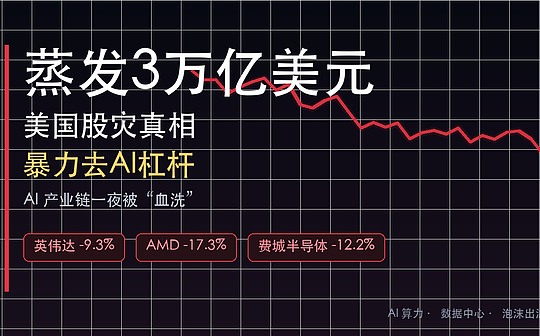
US Stock Correction: Is the Bottom In?
Recent analysis of third-quarter earnings by CICC (China International Capital Corporation) reveals that AI-related companies contributed a staggering 60% of the S&P 500’s earnings growth. However, beneath this headline number lies a troubling trend: capital expenditure is accelerating, free cash flow has turned negative for many AI leaders, and the marginal return on invested capital (ROIC) has dropped to 6.1%. This combination suggests the AI investment cycle is entering a “trough” period—a phase where the initial hype has faded, but the next wave of demand has yet to materialize.
The AI Earnings Mirage
While AI has been a major driver of earnings, the quality of those earnings is increasingly questionable. Companies are pouring billions into data centers, GPUs, and talent, but the revenue generated from AI products and services is not yet sufficient to offset these costs. Free cash flow, a key metric of financial health, has turned negative for several major players. The marginal ROIC of 6.1% is barely above the cost of capital for many firms, raising concerns about the sustainability of these investments.
This “青黄不接” (transitional gap) moment is characterized by a mismatch between supply and demand. On one side, AI infrastructure is being built at a breakneck pace. On the other, enterprise adoption and consumer demand for AI-powered applications are lagging. The result is a potential oversupply of compute capacity and a lack of killer apps that can generate meaningful returns.
Implications for Crypto and DeFi
The crypto market, particularly sectors tied to AI and decentralized compute, is not immune. Tokens associated with GPU networks, AI agents, and decentralized data marketplaces have rallied strongly on the AI narrative. However, if the broader AI investment cycle cools, these projects could face a reality check. Investors may become more discerning, demanding actual usage and revenue rather than just white papers and partnerships. The DeFi sector, which has its own challenges, could also see a rotation of capital as investors reassess risk.
Forward-Looking: Key Catalysts Ahead
The market is advised to adopt a cautious stance until a clear AI breakthrough or a pivot from the Federal Reserve materializes. The key node is early next year, when several factors could converge: potential rate cuts, new product launches from AI leaders, and clearer evidence of enterprise adoption. Until then, volatility is likely to persist. For crypto investors, this means focusing on projects with real traction and sustainable tokenomics, rather than chasing hype. The AI-crypto intersection remains promising, but the path forward may be bumpier than expected.