Nobel Economist Aghion: AI Needs Pro-Competition Policy, Not Just Innovation Rent
Cointime reports: In a wide-ranging essay on the government’s role in the AI era, 2025 Nobel economics laureate Philippe Aghion argues that artificial intelligence will follow a Schumpeterian growth pattern: innovation-driven productivity gains, but also rising inequality and the risk of entrenched monopolies. The paper, published in Government and Market Economy Research, calls for a new policy mix that includes pro-competition industrial policy, education reform centered on “learning how to learn,” and a revamped social safety net.
Key Findings
- Growth potential: AI could lift annual total factor productivity growth by 0.08% to 1.24% over a decade of mass adoption. This is more optimistic than some task-based models that project only 0.064% per year.
- Micro evidence: A study of a Fortune 500 software firm found that access to ChatGPT boosted customer-support productivity by 14% after one month and 25% after two months.
- Schumpeterian dilemma: Innovation rents are necessary to incentivize risk-taking, but incumbents may use those rents to block new entrants. Aghion points to rising markups in the US from 18% in 1980 to 67% in 2014 as evidence of this dynamic.
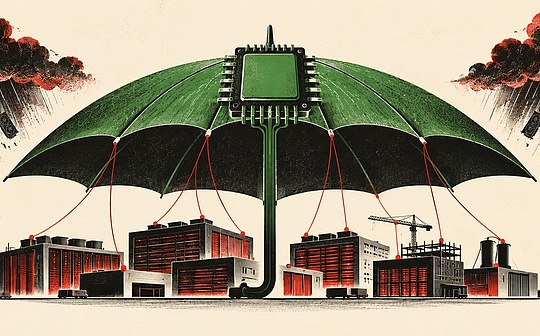
- AI value chain concentration: Cloud computing is dominated by Amazon, Google, and Microsoft, while Nvidia rules the GPU market. Upstream bottlenecks could stifle innovation.
Policy Implications
Aghion recommends that governments tolerate innovation rents but prevent monopolistic rents. Specific measures include promoting open source, simplifying data access, and extending the EU’s Digital Markets Act to the entire AI value chain. He also advocates public investment in computing infrastructure and open access to public data for AI research.
On education, the emphasis should shift from knowledge transmission to cultivating meta-cognitive skills—logical thinking, algorithmic reasoning, and data analysis. For income redistribution, Aghion suggests progressive taxation, capital gains taxes, and even “robot taxes” to fund retraining and social programs. He proposes an “AI Social Adaptation Committee” to coordinate policies across ministries.
Forward-Looking Perspective
As AI permeates crypto and blockchain—from decentralized compute networks to on-chain AI agents—Aghion’s framework offers a timely warning. The crypto industry has long championed open-source development and permissionless innovation, aligning with his call to keep entry barriers low. However, the concentration of AI infrastructure in a few tech giants mirrors the centralization risks that crypto aims to counter. Aghion’s balanced approach—tolerating innovation rents while ensuring competition—could serve as a blueprint for regulators navigating the intersection of AI and decentralized technologies. The coming decade will test whether policymakers can harness AI’s productivity potential without repeating the super-star firm stagnation seen after the IT revolution.