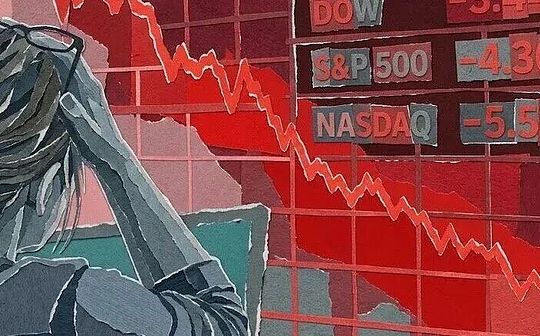
A trillion-dollar wake-up call for the AI trade
Cointime reports: US stocks suffered a sharp selloff on November 5, with the Nasdaq 100 plunging 6.4% and the S&P 500 dropping 4.4%—its worst single-day decline since April 2025. The rout erased roughly $2.3 trillion in market value from the Nasdaq 100 alone, while the combined market capitalization of the “Magnificent Seven” tech giants fell by over $1.04 trillion in a single session.
Semiconductor stocks bore the brunt of the selling. AMD tumbled 17.3%, Micron lost more than 17%, and Nvidia fell 9.3%. The Philadelphia Semiconductor Index briefly dropped nearly 11% intraday—its steepest plunge since March 2020—before closing down 5.23%. The contagion spread to storage, cloud computing, and data center operators, with Dell, CoreWeave, and GE Vernova all suffering notable losses.
Why the AI trade suddenly stalled
The immediate trigger was the US midterm election results, which gave Democrats control of both chambers of Congress and key victories in data center hubs like Texas and Georgia. Some Democratic candidates had advocated pausing or restricting data center development, raising fears of stricter regulation and longer approval timelines for AI infrastructure projects.
But the selloff also reflects three deeper concerns:
- AI investment returns remain uncertain. Microsoft, Amazon, Alphabet, and Meta continue to ramp up capital expenditures on data centers, chips, and power infrastructure. Investors are increasingly asking when these massive outlays will translate into revenue and profits.
- Rising reliance on external financing. Data center operators and neocloud providers are turning to debt and equity markets to fund buildouts. These projects are sensitive to financing costs and construction timelines, and tighter conditions could delay or scale back expansion plans.
- Overcrowded positioning. Years of AI-driven gains have concentrated capital in a narrow group of stocks, with some investors using leverage. When sentiment shifts, crowded exits can amplify declines through margin calls and systematic selling.
Wall Street remains divided
David Rosenberg of Rosenberg Research warns that a slowdown in data center construction could hit growth expectations for chip and equipment suppliers. Meanwhile, Mohamed El-Erian, chief economic adviser at Allianz, argues the market may be overreacting to AI risks, noting that short-term volatility does not negate long-term demand.
Not everyone is retreating. Cathie Wood’s Ark Invest bought 348,400 SpaceX-related shares worth about $47.4 million across three ETFs on November 5, even as it sold roughly 46,200 Alphabet shares. Wood’s flagship ARKK ETF has heavy exposure to Tesla, SpaceX, Tempus AI, and Circle—together over 28% of assets—making it vulnerable to the tech selloff, but she appears undeterred.
What to watch next
The AI trade is entering a new phase. Investors are no longer just rewarding scale—they are demanding evidence of returns. With tech giants still expanding AI spending and cloud demand intact, the key question is whether current valuations have already priced in future growth. For crypto markets, the selloff is a reminder that AI-linked tokens and decentralized compute narratives are not immune to broader risk-off sentiment. As financing conditions and political headwinds evolve, expect volatility to remain elevated across both traditional and digital asset markets.