Wall Street’s AI Trade Unwinds: Nasdaq Plunges 5.52% as Election Sparks Tech Selloff
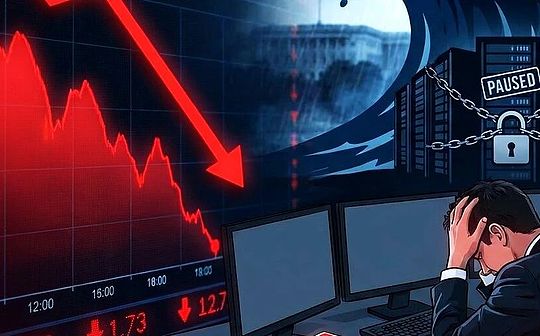
US equities suffered a sharp deleveraging event on Wednesday, with the Nasdaq Composite plummeting 5.52% and the Philadelphia Semiconductor Index cratering 12.25% — its worst single-day drop in years. The catalyst: a Democratic sweep of Congress, which investors fear will usher in stricter regulation of AI infrastructure, data centers, and the power-hungry compute buildout that has powered the market’s rally. Memory, optical communications, and neocloud names were hit hardest, with trillion-dollar market value evaporating from AI-linked stocks in a single session.
From Euphoria to Fear: The AI Infrastructure Trade Reverses
The selloff marks a violent reversal for the AI infrastructure complex, which had become the market’s consensus long. Semiconductor equipment makers, high-bandwidth memory suppliers, and optical networking firms — all levered to hyperscaler capex — saw double-digit declines as hedge funds rushed to unwind crowded positions. Several multi-strategy funds are reported to have suffered significant losses, with margin calls forcing further liquidation. The speed of the move suggests that positioning, not fundamentals, drove the rout: the AI trade had become one of the most concentrated bets in modern market history.
Regulatory Overhang Meets Earnings Uncertainty
Investors are now grappling with two overlapping risks. First, a unified Democratic government could pursue energy-efficiency mandates, environmental reviews, and antitrust scrutiny for AI infrastructure — raising the cost of capital for data center projects. Second, the earnings calendar offers little comfort: Berkshire Hathaway reports alongside tonight’s October nonfarm payrolls release at 21:30 ET, a double event that could either stabilize sentiment or accelerate the unwind. A weak jobs number would revive growth fears; a strong one would keep rate-cut hopes in check.
Contagion Risk to Crypto-Linked Equities
For crypto markets, the equity rout is a warning shot. Crypto-linked stocks — miners, exchanges, and treasury-holding companies — have traded as high-beta proxies for tech risk appetite. With the AI trade unwinding, correlations could tighten, and leveraged crypto positions may face similar margin pressure. The key question is whether this is a healthy rotation or the start of a broader risk-off regime. Tonight’s macro data and Berkshire’s commentary will be the first test.
Forward Outlook: Watch the Jobs Report and Berkshire
The next 24 hours are critical. If payrolls come in near consensus and Berkshire signals confidence in its equity portfolio, markets may find a floor. But if the labor market cracks or Berkshire turns cautious, the deleveraging could extend into next week. For crypto investors, the lesson is familiar: when the AI trade sneezes, risk assets catch a cold. Position sizing and liquidity management matter more than directional conviction in this environment.